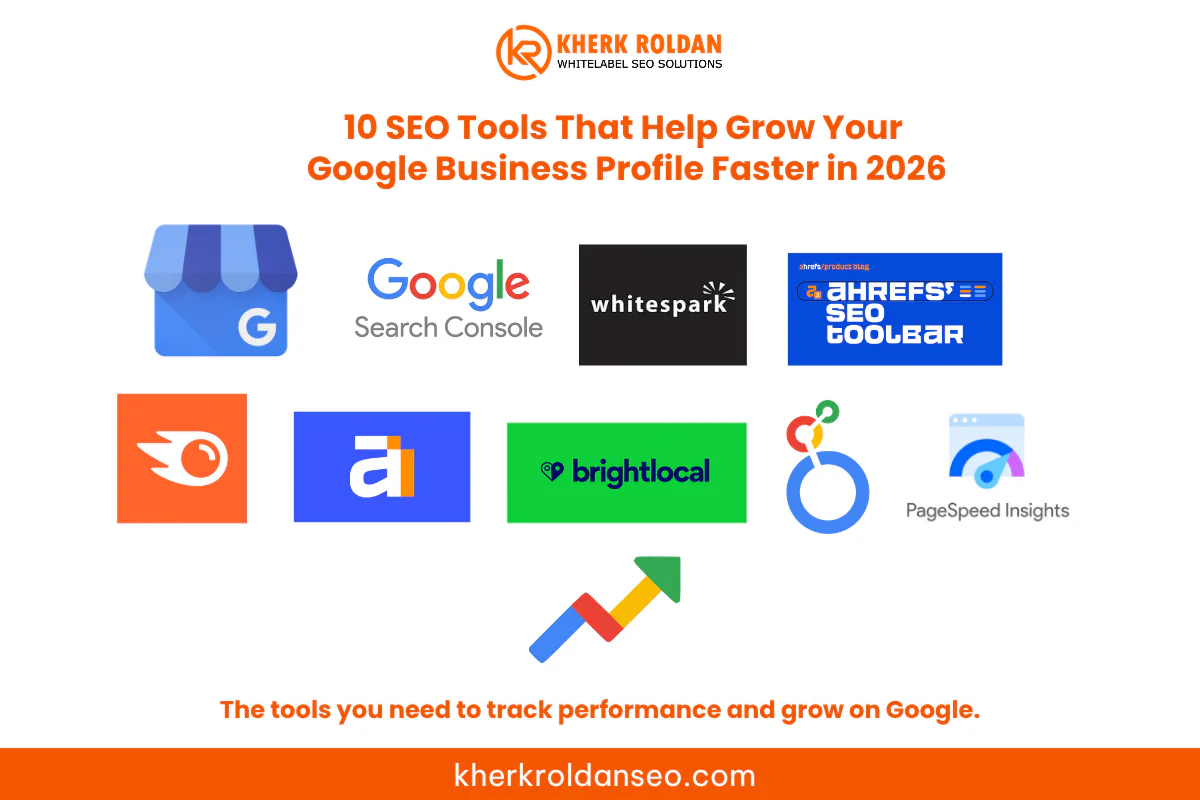
If you want more calls, more map views, and more local leads, the right SEO tools can save time and help you focus on what moves the needle. Here are the 10 best SEO tools worth using in 2026 for Google Business Profile, local search, and website support.
1. Google Business Profile
This is the first tool to use because it is the profile customers see on Google Search and Maps. Google lets you manage hours, photos, posts, offers, services, and other business details directly from Search and Maps.
It also includes performance data, so you can see how people find your profile and what actions they take after seeing it. That means you are not guessing which updates matter.
Best use case:
A local business that wants more calls, directions, bookings, or website clicks from Maps.
Why it matters:
A clean, complete profile is the base for local visibility. Google even has a Profile Strength indicator to help you spot missing information.
Google Search Console shows which search queries bring people to your site, which pages get clicks, and how your average positions move over time. It is one of the best ways to connect your website activity to your Google Business Profile work.
For example, if your profile is getting more attention but your service pages are not earning clicks, Search Console can help you find the gap. You can also spot which location pages need better titles, stronger content, or clearer local terms.
Best use case:
Tracking local queries, service-area terms, and page-level search performance.
3. BrightLocal
BrightLocal is built around local search, which makes it a strong choice for agencies and local businesses. It combines local rank tracking, listings work, review tools, and audits in one platform.
Its Local Search Grid is especially useful because rankings can look very different across a city. You may rank well near your office but poorly just a few miles away.
Best use case:
Businesses that want one tool focused on local rankings, citations, reviews, and reporting.
Real-world value:
If you manage several locations or service areas, this tool makes reporting much easier for both your team and your client.
4. Whitespark Local Rank Tracker
Whitespark is another strong local SEO choice, especially for rank tracking by area. Its local tools track rankings across different result types and narrow locations, including geo-coordinates, zip codes, and city centers.
That matters because “ranking #1” is often not true across the whole city. One part of town can perform very differently from another. Whitespark helps you see that clearly.
Best use case:
Businesses that want a clearer picture of local packs, Maps, and organic rankings in specific areas.
Semrush is widely used for broad SEO work, but its local features are especially helpful for Google Business Profile support. Its Listing Management tool keeps business information consistent across important directories. Semrush says it distributes and maintains accurate business details so your name, address, and phone stay consistent across the web.
That consistency matters because mixed business details can confuse both users and search platforms.
Best use case:
Businesses with directory issues, duplicate listings, or multi-location needs.
Example:
If your business phone number is different on several directories, this tool helps fix that problem faster than manual checks.
6. Ahrefs
Ahrefs remains a strong all-around SEO platform for keyword research, competitor checks, and tracking. Its Rank Tracker covers desktop and mobile rankings across 190+ locations, and Ahrefs now also highlights AI visibility and brand presence across AI systems and the web.
That makes it helpful in 2026, when visibility is not only about classic blue links. It is also useful for finding local intent keywords that can support service pages linked to your profile.
Best use case:
Keyword research, competitor checks, and tracking how your site supports your local presence.
7. Ahrefs SEO Toolbar
This free browser extension is one of the easiest tools to keep in your stack. Ahrefs says more than 400,000 marketers use it, and it can show titles, meta descriptions, heading structure, indexation clues, and SERP metrics without leaving your browser.
It is handy when reviewing competitor pages or checking your own location pages before publishing.
Best use case:
Quick page checks and SERP research without opening a full software dashboard.
Your website still matters for local SEO. PageSpeed Insights reports on user experience for mobile and desktop and offers suggestions for improving page performance.
A slow contact page, weak mobile experience, or clunky service page can hurt results after people click from your Business Profile. Even if your profile gets views, the website still has to do its job.
Best use case:
Checking the speed and usability of homepage, location pages, and contact pages.
9. Looker Studio
Looker Studio helps turn scattered data into a report you can actually use. Google says it connects to many data sources and makes it easy to build dashboards and reports.
This is helpful when you want one view for Google Business Profile performance, Search Console data, and site traffic. Instead of jumping between platforms, you can see the bigger picture.
Best use case:
Monthly client reporting or internal dashboards for local SEO campaigns.
10. Google Trends
Google Trends is simple, but it still earns a place on this list. It lets you compare search interest by time, location, and popularity.
This is useful for spotting seasonal service demand, comparing wording, and finding location-specific interest patterns. A business can use it to decide whether “near me,” service-specific, or city-specific phrases are worth a stronger focus on site pages and content.
Best use case:
Checking demand changes before writing new local pages or blog content.
How to Choose the Best SEO Tools for your Business
The best seo tool depends on what problem you need to fix first.
If your Google Business Profile is incomplete, start with Google Business Profile and Google Search Console. If you need local rank maps and review tools, look at BrightLocal or Whitespark. If you also want competitor data and keyword depth, add Ahrefs or Semrush.
A small business does not need ten paid tools on day one. In many cases, one strong local platform plus Google’s free tools is enough to get real traction.
A Smart Starter Stack for 2026
For most small local businesses, a practical stack looks like this:
- Google Business Profile for profile management
- Google Search Console for search queries and page performance
- BrightLocal or Whitespark for local rank tracking
- PageSpeed Insights for website checks
- Looker Studio for reporting
This mix covers profile activity, website support, local rankings, and reporting without making things too heavy. It also fits where local SEO is heading in 2026: stronger review signals, clearer performance tracking, and better visibility across AI-led search experiences.
FAQs
What is the best SEO tool for beginners?
For beginners, Google Business Profile and Google Search Console are the best starting point because they are free, useful, and directly tied to local visibility and search performance.
Which SEO tools help with Google Business Profile the most?
The most useful tools are Google Business Profile, BrightLocal, Whitespark, and Semrush Local because they help with profile work, listings, reviews, and local rank tracking.
Are free SEO tools enough for a small business?
They can be enough at the start. Many small businesses can get solid results with Google Business Profile, Search Console, PageSpeed Insights, and Google Trends before paying for extra software.
What is the best tool to track local rankings?
For local rank tracking, BrightLocal and Whitespark are two of the strongest options because they show rankings by area instead of only giving one broad average.
How do SEO tools help a Google Business Profile grow faster?
They help you track profile actions, reviews, rankings, website support, and local search demand. That gives you clearer direction on what to update next.
What is the best seo tool if you manage several locations?
For several locations, BrightLocal, Semrush Local, and Whitespark are strong choices because they help manage listings, local rank tracking, and location-based reporting.
Conclusion
Choosing the best SEO tools is not just about picking popular names. It is about using the right tools for the right purpose so your Google Business Profile, website, and local search presence all work together.
At Kherk Roldan Advanced Digital Solutions, these are the same types of tools we use to monitor performance, track local rankings, review search data, and improve visibility for businesses that want better results in Google Search and Maps.
If you want help knowing which tools fit your business and what actions to take next, we also offer a free strategy call. It is a simple way to get clear direction based on your goals, market, and current online presence.