In SEO, identifying issues early is crucial, and using a website auditor can help you pinpoint problems before they affect your rankings. Whether you manage a blog or an online store, regularly checking your site’s SEO health is essential for staying competitive in search results.
Automated audits can quickly catch technical issues, but often overlook the broader context. Manual checks take more time but offer more profound insights into content quality and user experience.
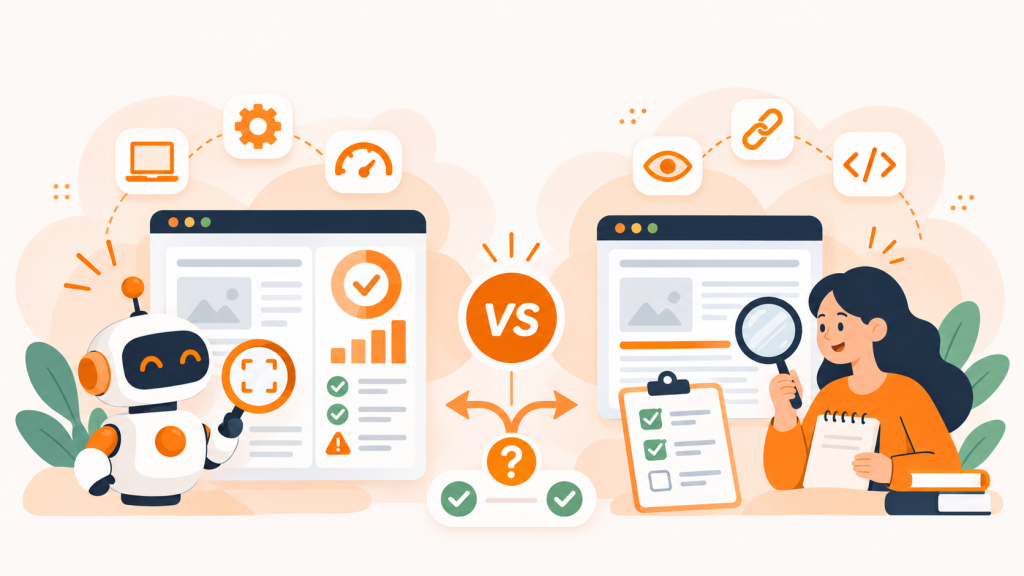
In this article, we’ll compare automated and manual SEO checks, explore which method gives clearer insights, and show how combining both leads to a more innovative strategy built around your goals.
What is a Website Auditor?
A website auditor is a specialized tool or software that automatically scans your website to identify SEO issues. These tools are designed to provide a comprehensive overview of your site’s health, covering technical SEO elements, on-page content, backlinks, and overall site performance. Popular website auditing tools include SEMrush, Ahrefs, and Screaming Frog, all of which have robust features designed to streamline SEO audits.
These tools typically perform a variety of tasks:
- Technical SEO Checks: Scanning for site errors like broken links, slow page load speeds, and missing meta descriptions.
- Content Analysis: Analyzing the quality and relevance of content, keyword usage, and optimization.
- Link Profile Evaluation: Identifying both toxic backlinks and opportunities for better link building.
- Mobile Usability: Checking if the website is responsive and properly optimized for mobile devices.
- Site Speed Analysis: Offering insights into how long pages take to load and what can be done to improve speed.
They can scan hundreds or even thousands of pages in minutes, offering a high-level overview and actionable recommendations that help strengthen your SEO foundation.
What Are Manual SEO Checks?
Manual SEO checks require a human to review and analyze the various aspects of the website. This approach is more time-consuming and labor-intensive but provides in-depth insights that automated tools may overlook. Manual checks are often performed by experienced SEO professionals who can assess both technical and content aspects in more detail.
Key aspects of manual SEO checks include:
- In-Depth Keyword Analysis: Identifying keyword opportunities and gaps that may be difficult for automated tools to detect. This requires a deep understanding of user intent and search behavior.
- Competitor Comparison: Assessing your competitors’ websites, their keyword strategies, and backlink profiles to determine areas of improvement for your site.
- Content Review: Manually analyzing whether the content is meeting the needs of the audience, aligning with search intent, and providing the best possible value.
- User Experience (UX) Evaluation: Analyzing site navigation, usability, and accessibility to ensure that visitors have a positive experience on your website.
Manual SEO checks also allow for a more personalized approach. While an auditor might flag an issue, a manual reviewer can dive deeper into the problem to uncover its true root cause.
Key Differences Between Automated Tools and Manual SEO Checks
Speed and Efficiency
Automated tools are fast, efficient, and ideal for scanning large websites. They catch common technical issues, offer structured reports, and require minimal effort to run. However, they often rely on predefined rules and may overlook contextual or strategic concerns.
Manual checks take longer but provide a human perspective. They enable a more thoughtful review of content quality, search intent alignment, brand tone, and user experience, which automated tools can’t fully grasp. They’re handy for identifying subtle issues that impact rankings and engagement.
The key difference lies in depth versus scale. Automated tools excel in speed and coverage, while manual audits delve deeper into strategy and relevance. Using both together often yields the most comprehensive SEO insights.
Depth of Analysis
Automated tools are quick and effective at identifying technical issues such as missing alt tags, slow load times, or broken links. However, they often miss essential nuances in content strategy, keyword intent, or user experience. These tools can’t interpret content or understand search intent the way a human SEO professional can.
Manual checks provide a more in-depth understanding of how a site performs for real users. They help evaluate content quality, tone, relevance, and engagement, elements that machines can’t fully grasp. For instance, a tool might flag duplicate content, but a manual review determines whether that content adds real value or simply repeats existing information.
Cost-Effectiveness
Automated tools typically come with a subscription fee, which can vary based on features, page limits, and the depth of analysis offered. For businesses working with limited budgets, this option is often more affordable than ongoing expert-led audits. They enable regular checks and quick fixes without incurring additional costs each time.
Manual checks, on the other hand, require the involvement of experienced SEO professionals, whose time and expertise are in high demand. While this adds to the cost, it brings significant value, especially for websites that need a tailored, strategic approach that goes beyond surface-level fixes.
Accuracy and Reliability
Website auditors, while powerful, are not perfect. They may flag issues that are not significant or miss more subtle problems that can only be caught by a skilled human eye. For instance, an auditor may fail to identify a high-quality link that could benefit your SEO strategy simply because it’s a bit more complicated than a simple backlink.
Manual checks, on the other hand, are more accurate in terms of identifying the true significance of specific SEO factors. For example, SEO professionals can weigh the relevance of a backlink, consider its context, and analyze the content of pages in a more nuanced way than an automated tool could.
Flexibility and Customization
Automated tools are highly standardized. While they offer some customization options, the scope of the audit is generally predefined. For example, the review might cover core SEO elements, such as keyword usage, page speed, and technical errors. However, it may not address industry-specific challenges or competitive landscape insights unless manually adjusted.
Manual SEO checks, on the other hand, provide much greater flexibility. An experienced professional can tailor the review to focus on what matters most to your business, whether that’s refining content strategy, analyzing competitors, or conducting in-depth keyword research. This adaptability enables a more strategic and relevant assessment tailored to your unique goals.
Which Should You Choose?
The choice between using automated tools or performing manual SEO checks depends on several factors, including the size, complexity, and level of insight required for your website.
Automated Tools: Best for
- Large websites: Ideal for scanning many pages quickly to ensure no major technical issues are missed.
Quick overviews: Great for rapid SEO health check-ups when you need immediate feedback.
Regular updates: Useful for routine monitoring and ongoing technical reviews without much manual effort.
Manual SEO Checks: Best for
Tailored strategies: Perfect for businesses needing a customized approach aligned with specific goals and challenges.
Competitor analysis: Offers more precise insights when reviewing how competitors perform and where opportunities lie.
Content evaluation: Helps assess if your content truly meets user expectations, aligns with search intent, and supports long-term performance.
Conclusion
Both website auditors and manual SEO checks serve distinct roles in enhancing your site’s performance. Auditors provide a quick overview of technical issues across multiple pages, while manual checks enable a deeper inspection, particularly when it comes to strategy, content, and competitor analysis. When used together, they provide a comprehensive view of your site’s current status and the following steps to take.
That’s exactly what we handle at Kherk Roldan White Label SEO Solutions. While you focus on growing your business, our team takes care of the research, technical fixes, content reviews, and everything in between. You get real work done for your clients, without the time drain or the stress of doing it yourself.
Want to see how it all works? Book a free strategy call with Kherk Roldan today and let’s create a plan that yields lasting results.